

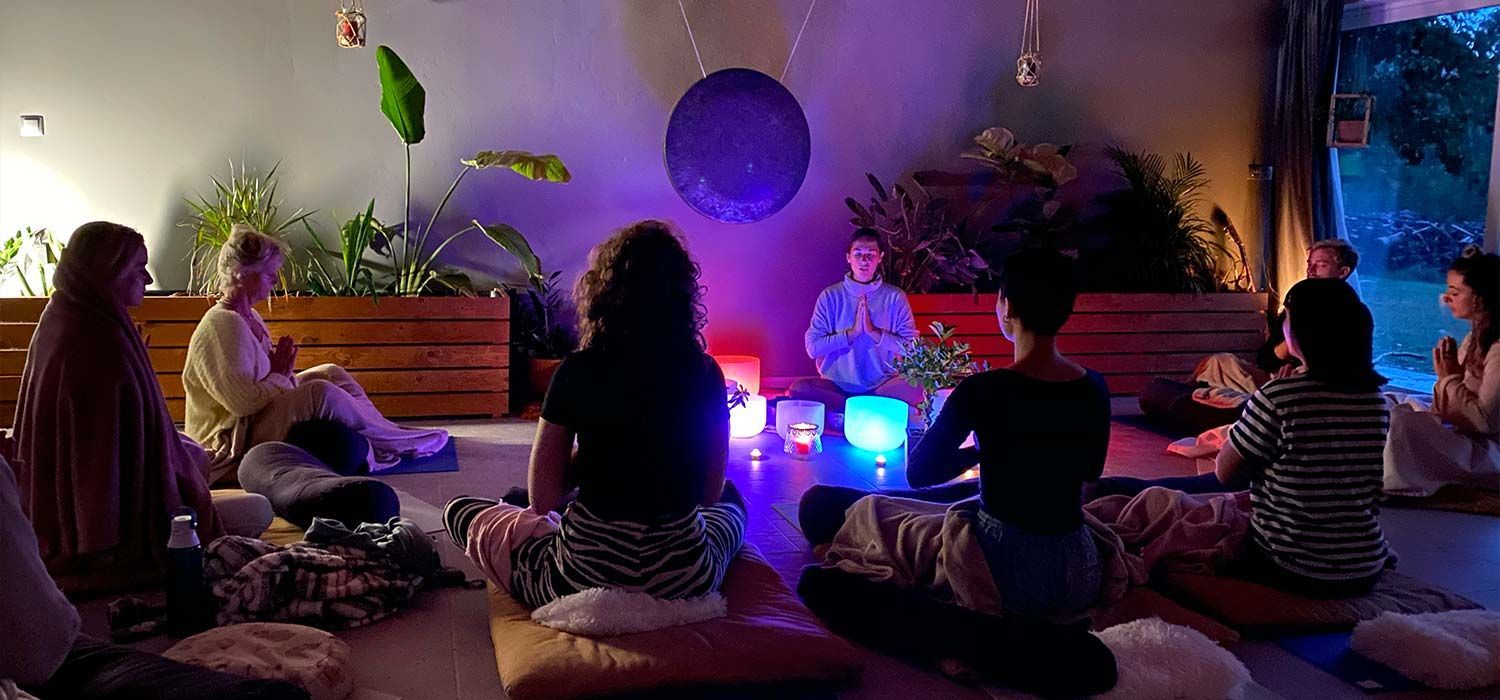

Non-duality, often referred to as Advaita in Hindu philosophy, is a profound spiritual concept that encompasses a wide range of teachings and practices. At its core, non-duality points to the fundamental understanding that there is an underlying unity or oneness that pervades all of existence, transcending the apparent duality and multiplicity that we perceive in the world. Non-duality challenges the conventional notion of reality as being composed of separate and distinct entities, whether they are objects, beings, or concepts. Instead, it suggests that these apparent divisions are illusory and that there is a deeper, unified essence that underlies all phenomena. Non-duality recognizes that our perception of separation is a result of our limited understanding and conditioned ways of thinking. In the context of non-dual philosophy, the term "non-dual" is derived from the Sanskrit word "Advaita," which literally means "not two" or "not dual." It emphasizes the inherent unity between the individual self (jiva) and the ultimate reality (Brahman) or consciousness. According to non-dual teachings, the individual self, which is often identified with the body, mind, and ego, is ultimately an expression or manifestation of the same underlying reality that encompasses everything. Non-duality invites us to look beyond the surface-level appearances and to inquire into the nature of our own experience. It encourages us to question our assumptions, beliefs, and concepts in order to discover the truth of our own being. It suggests that by investigating the nature of our thoughts, emotions, sensations, and perceptions, we can arrive at a direct experience of the non-dual reality. Practices such as self-inquiry, meditation, and contemplation are often employed to facilitate this process of self-discovery. By turning our attention inward and examining our subjective experience, we can begin to unravel the layers of conditioning and identification that perpetuate the illusion of separation. Non-dual philosophy asserts that the realization of non-duality is not something to be achieved or attained, but rather a recognition of what is already and always present. It is a shift in perception that reveals the underlying unity and interconnectedness of all things. This realization is said to bring about a profound sense of peace, freedom, and liberation, as one recognizes their essential nature as pure consciousness or awareness. In summary, non-duality is a spiritual philosophy that points to the inherent unity of all existence. It challenges the conventional understanding of reality as separate and encourages a direct exploration of one's own experience to discover the truth of one's being. By transcending the limitations of duality and recognizing the underlying oneness, non-duality offers a transformative understanding that can profoundly impact one's perception of oneself, others, and the world.

Experiencing a yoga retreat is a terrific opportunity to unwind, conduct some self-discovery, and, of course, advance your yoga practice. However, with hundreds of retreats springing up all over the world, picking which one is best for you might be difficult. Whether you're just starting out on your yoga journey or have years of expertise, here are some things to ask to ensure you're picking the appropriate retreat for you.

There are various misconceptions about yoga that indicate it is only for individuals who are already athletic, flexible, and youthful. We're here to dispel the myths about yoga that keep many individuals from even stepping onto a mat.
Non-duality, often referred to as Advaita in Hindu philosophy, is a profound spiritual concept that encompasses a wide range of teachings and practices. At its core, non-duality points to the fundamental understanding that there is an underlying unity or oneness that pervades all of existence, transcending the apparent duality and multiplicity that we perceive in the world. Non-duality challenges the conventional notion of reality as being composed of separate and distinct entities, whether they are objects, beings, or concepts. Instead, it suggests that these apparent divisions are illusory and that there is a deeper, unified essence that underlies all phenomena. Non-duality recognizes that our perception of separation is a result of our limited understanding and conditioned ways of thinking. In the context of non-dual philosophy, the term "non-dual" is derived from the Sanskrit word "Advaita," which literally means "not two" or "not dual." It emphasizes the inherent unity between the individual self (jiva) and the ultimate reality (Brahman) or consciousness. According to non-dual teachings, the individual self, which is often identified with the body, mind, and ego, is ultimately an expression or manifestation of the same underlying reality that encompasses everything. Non-duality invites us to look beyond the surface-level appearances and to inquire into the nature of our own experience. It encourages us to question our assumptions, beliefs, and concepts in order to discover the truth of our own being. It suggests that by investigating the nature of our thoughts, emotions, sensations, and perceptions, we can arrive at a direct experience of the non-dual reality. Practices such as self-inquiry, meditation, and contemplation are often employed to facilitate this process of self-discovery. By turning our attention inward and examining our subjective experience, we can begin to unravel the layers of conditioning and identification that perpetuate the illusion of separation. Non-dual philosophy asserts that the realization of non-duality is not something to be achieved or attained, but rather a recognition of what is already and always present. It is a shift in perception that reveals the underlying unity and interconnectedness of all things. This realization is said to bring about a profound sense of peace, freedom, and liberation, as one recognizes their essential nature as pure consciousness or awareness. In summary, non-duality is a spiritual philosophy that points to the inherent unity of all existence. It challenges the conventional understanding of reality as separate and encourages a direct exploration of one's own experience to discover the truth of one's being. By transcending the limitations of duality and recognizing the underlying oneness, non-duality offers a transformative understanding that can profoundly impact one's perception of oneself, others, and the world.
Experiencing a yoga retreat is a terrific opportunity to unwind, conduct some self-discovery, and, of course, advance your yoga practice. However, with hundreds of retreats springing up all over the world, picking which one is best for you might be difficult. Whether you're just starting out on your yoga journey or have years of expertise, here are some things to ask to ensure you're picking the appropriate retreat for you.
There are various misconceptions about yoga that indicate it is only for individuals who are already athletic, flexible, and youthful. We're here to dispel the myths about yoga that keep many individuals from even stepping onto a mat.